
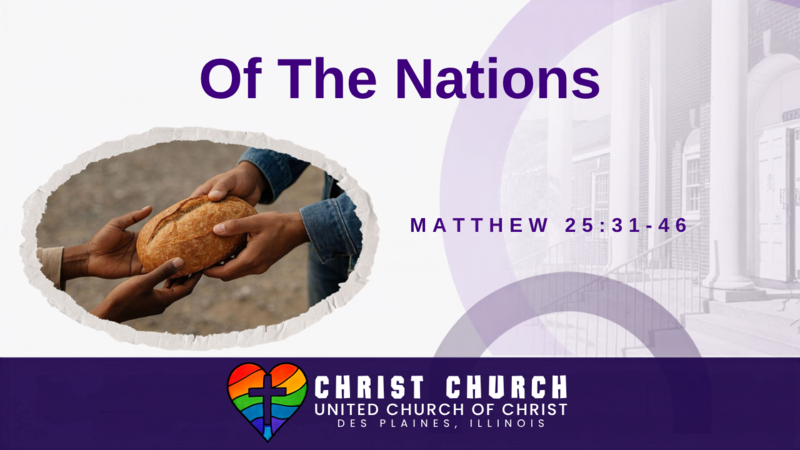
On Reign of Christ Sunday, we are invited to consider what it truly means to proclaim that Christ reigns over all creation. In Matthew 25:31–46, Jesus describes all the nations gathered before him, but the measure of their faithfulness is not their wealth, political influence, military strength, or religious identity. Instead, Jesus points toward how they have treated the hungry, the stranger, the sick, the imprisoned, and those in need.
In "Of the Nations," Rev. Gilbert Martinez challenges the idea that Jesus belongs exclusively to any one country, including the United States. While loving one's nation is not inherently wrong, claiming Christ as the possession of a particular people risks overlooking the very compassion and justice Jesus calls us to practice.
This reflection reminds us that God's love does not end at national borders and that human dignity is not determined by citizenship, nationality, language, or legal status. The question is not whether Jesus stands on our nation's side, but whether our lives, communities, and institutions reflect the mercy, justice, and compassion of Christ.
Key Sermon Points
-
Christ belongs to no single nation. No one can claim Jesus exclusively for the United States or any other country. His reign extends beyond political boundaries and national identities.
-
Compassion is central to faithful living. Matthew 25 calls us to examine how we respond to hunger, sickness, imprisonment, and those seeking welcome.
-
Citizenship does not determine human dignity. National borders and immigration status cannot determine whose humanity deserves recognition.
-
Faith requires more than religious declarations. Proclaiming Christ's name means little when our actions consistently contradict his teachings.
-
The reign of Christ must be visible in our lives. We participate in Christ's reign when our communities reflect justice, mercy, and care for one another.

